We’d be lying if we said that all almond milks were made the same.


As many of us make the switch from dairy to plant-based milk alternatives, we are more than spoilt for choice. With at least 20 milks on the market, how do you find the best milk for your diet and weight loss goals?
We’re here to help by breaking down the need-to-know info for one of the most popular alternative milk options: almond milk.
This article answers all your curious questions, like:
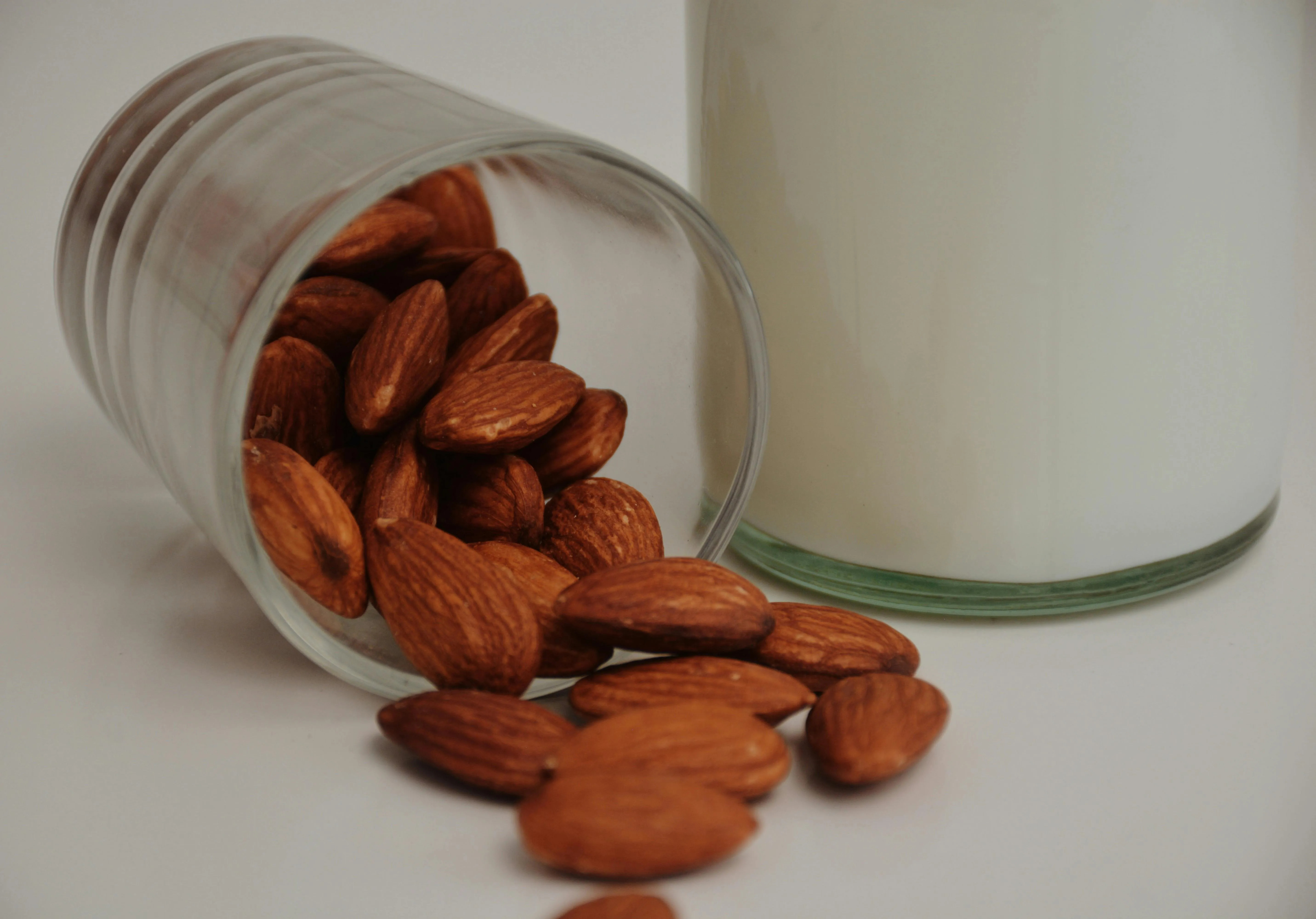
Almond milk is a plant-based milk alternative made from ground nuts. The most common way to make it is by blending almonds with water and then straining the mixture [1].
Some almond milk products use soaked almonds because they are gentler on your digestion and help your body absorb all the nutrients. There are also mixed milk options, such as almond and coconut milk [3].
We’d be lying if we said that all almond milks were made the same. But they do have a lot in common.
Along with its sweet and nutty flavour, almond milk is naturally low in calories, fat and sugar [3]. It’s also a good source of essential nutrients, like iodine, magnesium, phosphorous and potassium.
To find out exactly what’s in your favourite almond milk, we recommend checking the product's nutrition label. For a general estimate, we can turn to the Australian Food Composition Database.
Here is a breakdown of 3 types of almond milk, based on a single serve of 200ml [2].
That’s a good-looking table, but we think it’s important to dig a bit deeper here. There are 3 important elements we want to highlight.
First, there’s the sugar content. While all varieties have less than the recommended 5g of sugar per serve, the unsweetened version has none [3]. This makes it a better option if cutting back on sugar is one of your goals.
Next, we can check the protein content of milk. All of these options are low in protein, with only 1g per serving, which means you’ll need to focus on getting protein from other parts of your diet.
Finally, there’s the fortified vs unfortified milks. The fortified almond milk is the only option that is high in calcium and has B vitamins. If you choose a natural almond milk, then you’ll want to ensure you get these nutrients in other parts of your diet.
There’s more good stuff in almond milk than just the calories or calcium content. There are also a host of other benefits that it can help support in your body, such as [1][3][4][8]:
In good news, the process for making almond milk doesn’t affect the nutrient quality, which means filling up your glass can have similar benefits to eating the nuts whole [1].
But it is worth checking how much almond is actually in your chosen almond milk. Commercial products contain anywhere from 2%-10% almonds, which means a serving of almond milk is not the same as eating a handful of raw almonds [11].
It’s time to answer the question of the day. Yes, almond milk can support weight loss as part of a healthy and balanced diet.
That’s the short version, now get ready for the long one. Let’s start with a study that found daily consumption of almond milk for 4 weeks helped reduce weight, BMI and waist circumference [8].
A different study found that of all the nuts, almonds were the most effective for weight loss. They helped participants reduce body weight by 0.5kg, compared to only 0.2kg for other nuts [1].
So, why did almonds work so well? There are a few possible reasons [1][2][8]:
We’re as excited as you are about all this good news for almond milk and weight loss. But, we also know it’s easy to get carried away – so allow us to set your expectations.
It comes back to what we said at the start: almond milk can support weight loss as part of a balanced diet. That means focusing on all the food groups equally, not looking for a single silver bullet.
Some of the nutrients that are lacking in almond milk, like protein and fibre, are known to support weight loss. Even healthy fats have a role to play. So, at the end of the day – we recommend taking a look at your diet as a whole and enjoying almond milk as one part of it.
If you'd like more personalised advice and support on your weight loss journey, you might like to consider Juniper’s Weight Reset Program.
Juniper offers medically-backed weight loss treatments, but with the additional support and one-on-one health coaching for long-term, sustainable weight loss and weight management.
That means you can enjoy your favourite foods while working towards sustainable results, with expert guidance every step of the way. Because weight loss shouldn’t be about restriction — it should be about empowerment, balance, and finally feeling in control.
Did you know there are more than 20 alternative milks on the market? The most popular are soy, almond and coconut – though oat milk is experiencing a steady rise [3].
That means you have no shortage of options when it comes to finding a top milk for your diet. So, what else is out there? Here are 6 milk options we recommend and why [4][9]:
Choosing the right milk for your diet depends on so many factors, from your health and weight goals to any dietary requirements you might have. We know it’s not always easy, which is why we recommend seeking out support.
You might like to work with a dietitian on a personalised meal plan. You could also consider programs, like Juniper, that help you achieve your health goals with sustainable diet and lifestyle support.
Still have burning questions when it comes to almond milk? We’ve done our best to answer some of the most common ones below.
Yes, almond milk can form part of your daily diet. In fact, studies show that regularly eating almonds can help with healthy blood pressure, lower cholesterol levels and reduce oxidative stress [1].
The best results were seen with about 50g-100g of almonds per day, which is definitely less than what’s in almond milk. But that doesn’t mean almond milk can’t make up part of your daily allocation.
Some people do find that having too many almonds can lead to stomach upsets. While it’s a rare side effect, it’s worth keeping an eye on any new symptoms and checking in with your dietitian or doctor for support.
We prefer not to focus on negatives when it comes to food, since they all have a place in a healthy diet. So, we’d like to reframe this one as things to be aware of.
When it comes to almond milk, it’s important to focus on finding a nutrient-dense product. This is because, unlike regular dairy milk, almond milk doesn’t contain much calcium, vitamin D or B12 [3].
These are essential nutrients for everyone, but especially those on vegan or vegetarian diets.
Looking for fortified almond milk products can help, especially for calcium and vitamin D. Another option is making up for these lost nutrients in other parts of your diet.
Good health is an individual pursuit, which means what’s healthier will be an individual choice too. Rather than give you a single answer, we’re going to compare some of the key differences between almond milk and cow’s milk.
Almond milk and other nut milks are lower in calories than dairy milk, with around 30 calories per 100ml of nut milk compared to 50 calories per 100ml of cow’s milk [2]. They also contain healthy unsaturated fats, whereas dairy milk has mostly saturated fat [3].
On the other hand, dairy milk contains plenty of protein, calcium and zinc – all of which help build muscle mass and bone density [2]. While many plant-based milks are fortified with these nutrients, they may not be as easily absorbed in the body as the natural variety found in cow’s milk.
Making the ‘healthier’ choice will depend on your personal goals. If you have a dairy allergy, follow a vegan diet or are focused on reducing calories and fat, that choice might be almond milk.
But if you enjoy the taste of dairy milk, are focused on protein in your diet or building muscle, you might prefer cow’s milk.
There is no right or wrong answer when it comes to homemade or store-bought almond milk. Both options have their pros and cons, which we’ll share and leave the final choice up to you [10][11].
Homemade almond milk typically has a higher percentage of almonds in it. Homemade can have up to 25% almonds, depending on the recipe, whereas most store-bought options have only 2%-10% almonds.
The more almonds in the milk, the more potential health benefits for your body. But we know it’s no walk in the park making your own milk every week. It can also be expensive, as almonds are somewhat of a premium ingredient.
So, rest assured that store-bought is also a healthy option. A big plus of commercial almond milk is that it can be fortified with calcium, a key nutrient that is missing from most plant-based milk alternatives. You’ll want to look out for one with at least 120mg of calcium per 100ml.
Image credit: Pexels